



 (902)442-8853
 CALL US
 EMAIL US

Canada has one of the highest reported rates of Inflammatory Bowel Disease (IBD) in the world. Crohn’s disease is one of two main forms. It is estimated that over 300,000 Canadians live with IBD. The condition significantly affects many people, including those in Atlantic Canada.
If you have been diagnosed with Crohn’s disease, you may be eligible for disability-related benefits in Canada. Eligibility depends on the particular program, not on the diagnosis alone. Relevant considerations may include abdominal pain, fatigue, urgent bowel movements, complications, treatment side effects, and their effects on work or daily activities.
For some people, Crohn’s disease can make daily tasks very hard. Simple actions may feel impossible. You might qualify for disability benefits in Canada. This depends on how severe your condition is and how it affects your daily activities.
Crohn’s Disease
Crohn’s disease is one of the two main types of inflammatory bowel disease (IBD), along with ulcerative colitis. Ulcerative colitis primarily affects the lining of the large intestine (colon) and rectum. Some cases are described as indeterminate colitis when the features overlap and a clear classification is difficult.
Crohn’s disease is a long-lasting inflammatory condition. It leads to swelling and irritation in the digestive tract. This inflammation can disrupt and interfere with the body’s ability to digest food, absorb nutrients, and get rid of waste effectively. Crohn’s disease is a lifelong condition. It has periods of active symptoms, called flares, and times of remission, when symptoms may improve or lessen.
Active Crohn’s symptoms can be severe and frequent, but they differ for everyone. This unpredictability can really change daily activities. It affects work and the quality of life for those impacted.
Crohn’s Disease as a Cause of Disability
To understand why Crohn’s disease can cause disability, we need to know how it interacts with the body.
Below is a medical illustration of the GI tract, outlining the:
- Mouth
- Esophagus
- Stomach
- Small Intestine
- Ileocecal Valve
- Large Intestine (Colon)
- Duodenum
- Jejunum
- Ileum
- Cecum
- Appendix
- Rectum
- Anus
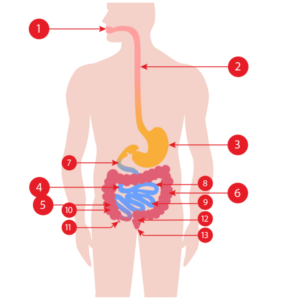
Crohn’s disease is a chronic type of IBD. It can cause inflammation anywhere in the digestive tract, most commonly near the end of the small intestine and the beginning of the large intestine.
The exact cause of Crohn’s disease isn’t fully known. Researchers think it comes from a mix of genetics, environmental factors, and the immune system. Crohn’s disease causes inflammation in the bowel walls. This can lead to severe pain or discomfort. It may also cause digestive problems and long-term issues, like nutrient deficiencies.
Some common symptoms of Crohn’s disease may include:
- Abdominal pain, ranging from mild to severe;
- Persistent diarrhea;
- Fatigue;
- Weight loss;
- Reduced appetite;
- Nutritional deficiencies.
In some cases, the severity of Crohn’s disease may need surgical intervention. Other serious complications and severe symptoms linked to the condition can include:
- Partial or complete bowel obstructions;
- Fistulas;
- Abscesses.
Crohn’s disease can profoundly affect a person’s ability to work, attend school, and carry out everyday activities. The condition can be unpredictable. Symptoms like chronic pain, fatigue, and digestive issues add to the challenges. This affects both personal and professional life significantly.
Disability Benefits
Many Canadians with Crohn’s disease depend on financial support programs. These programs help them manage the effects of their condition.
Eligibility depends on how severe a person’s symptoms are and how they affect daily life. Qualification is not automatic, and the rules differ between programs. Depending on your circumstances, you may be eligible for one or more of the following benefits or credits:
- Canadian Pension Plan Disability Benefits (CPP-D);
- The Disability Tax Credit (DTC);
- The Canada Disability Benefit (CDB);
- Long-term disability benefits (LTD).
People applying for LTD or CPP disability benefits should explain how Crohn’s disease limits their ability to work. Other programs, including the DTC, apply different tests.
Medical Qualifications
For LTD or CPP-D claims, applicants need to provide medical evidence that addresses the diagnosis and the functional limitations relevant to the applicable work-capacity test. Depending on the claim, supporting evidence may include:
- Colonoscopies and endoscopic examinations;
- Diagnostic imaging, such as CT scans or MRI scans;
- Blood work and other laboratory testing;
- Gastroenterology specialist assessments and reports;
- Functional capacity evaluations, where applicable.
A disability application should provide a clear picture of the illness and the limitations relevant to the specific benefit or credit. This information is critical for your claim. Be sure to include all relevant information, such as:
- Your diagnosis, prognosis, and current treatment plans;
- The frequency and severity of symptoms, including flare-ups, hospitalizations, and complications with the disease management;
- An outline of all impairments, functional limitations, and workplace restrictions in place as a result of the condition and related symptoms;
- Upcoming or planned consultations with specialists, such as gastroenterologists or colorectal surgeons;
- Records showing the psychological and emotional impacts of living with a severe chronic illness.
- Any extra supporting documentation, including doctor’s clinical notes, diagnostic test results, specialist reports, surgical records, and hospital records.
Clear medical proof shows how Crohn’s disease impacts your abilities. Providing thorough details and accurate information is likely to strengthen your claims legitimacy.
For LTD or CPP-D claims, useful evidence may also document symptoms and their effects on work, including:
- Frequent or urgent bowel movements;
- Severe abdominal pain;
- Fatigue;
- Weight loss or severe malnutrition;
- Repeated hospitalizations or surgeries;
- Side effects from treatment;
- Functional limitations that make regular employment difficult or impossible.
Disability Benefits in Canada
Under the Nova Scotia Human Rights Act, disabilities are protected against discrimination, including in employment. Crohn’s disease may fall within that protection. However, human rights protections do not, by themselves, establish eligibility for CPP-D, LTD, or the other benefits and credits. Those programs apply their own eligibility criteria, and provincial support may also be available in some circumstances.
The benefits you qualify for will depend on the severity of your specific condition, and the degree in which it impacts quality of life. The effects of Crohn’s disease on work, school, and daily activities may be relevant evidence, but their legal significance depends on the particular right, benefit, or program being considered.
CPP Disability Benefit
The Canada Pension Plan disability (CPP-D) benefit is a taxable monthly payment administered by Service Canada for eligible CPP contributors who meet the statutory test for a severe and prolonged disability. It is not based on a diagnosis alone. It offers partial income support for those whose medical condition stops them from working.
For CPP-D specifically, a disability must:
- Be severe, meaning the person is incapable regularly of pursuing any substantially gainful occupation; and
- Be prolonged, meaning it is likely to be long continued and of indefinite duration or likely to result in death.
What Can I Receive on CPP-D Benefits?
CPP-D includes a basic monthly amount and an additional amount based on CPP contributions. The published maximum for a new benefit starting in January 2026 was $1,741.20 per month. The maximum can vary with the month benefits begin, so applicants should check Service Canada for current figures.
The exact amount you may be entitled to receiving depends on factors including:
- How long you contributed to the Canada Pension Plan; and
- Your earnings throughout your working years.
Some people with dependent children may get an extra monthly benefit. In 2026, this was $307.81 per month for children under 18 and qualifying full-time students aged 18 to 25.
Benefit amounts and eligibility can change. So, it’s important to check the latest info from Service Canada. Do this when you fill out a CPP-D benefit application.
Who is Eligible for CPP-D Benefits?
People with Crohn’s disease may qualify for CPP-D benefits if they meet the severe-and-prolonged disability test outlined above and the applicable CPP contribution requirements.
To qualify for CPP-D benefits, an applicant must generally;
- Be at least 18 years old and under age 65.
- Have a mental or physical disability that regularly prevents you from working.
- Have a disability that is considered severe and prolonged.
- Meet the applicable CPP contribution requirements, subject to statutory exceptions.
The Government of Canada says applicants must meet one of these CPP contribution requirements:
- Have contributions to the CPP for at least 4 of the last 6 years before the date you became disabled; or,
- Have contributed to the CPP for 25 years previously, including contributions in 3 of the last 6 years.
For individuals with Crohn’s disease, Service Canada assesses whether the symptoms and problems meet the CPP-D criteria. They will assess if these issues affect the person’s ability to pursue regular, well-paying work. Symptoms such as pain, fatigue, urgent bowel movements, and treatment complications may be relevant to these considerations.
Some people with Crohn’s disease might not get CPP-D benefits. This could be because their condition isn’t viewed to be severe enough, or they haven’t made enough CPP contributions. We will discuss these reasons more in the following section.
There are exceptions and special provisions affecting CPP contributions in some circumstances, so a person who is unsure about eligibility may benefit from advice before assuming they are ineligible.
If you’re unsure about your eligibility, or have had your application denied, getting legal or professional advice can help. The lawyers at NOVA Injury Law are experienced in handling disability claims and can clarify your options and guide you on the best steps to take.
CPP-D Benefit Was Declined
If Service Canada denies your CPP-D application, you’ll get a decision letter. This letter will explain why your application was denied. There are several reasons why an application related to Crohn’s disease may be unsuccessful, including:
Your disability is not considered severe enough
There is no doubt that Crohn’s disease can greatly affect daily life. However, a condition may interfere with daily life but still fall short of the statutory CPP-D test, which concerns the ability to regularly work a job that provides a meaningful level of income.
Chronic abdominal pain, frequent bowel movements, fatigue, and flare-ups can be hard to manage. Providing clear evidence of this can help Service Canada determine how the condition affects regular work capacity.
You have not made enough CPP contributions
To qualify for CPP-D benefits, you must have contributed sufficiently to the Canada Pension Plan during your working years. These contribution requirements are commonly referred to as the minimum qualifying period. Even if a person is dealing with severe or prolonged Crohn’s disease, they may not qualify for CPP-D benefits if they haven’t met the contribution threshold.
To review your contribution history, you can request a CPP Statement of Contributions from Service Canada. If you have a My Service Canada Account, you can also access this information online.
If your application was denied, check the reasons for the decision. This can help you see if more medical evidence, updated documents, or specialist reviews might boost your chances of success.
Appealing a CPP-D Benefit Decision
If your CPP-D application was denied and you think it was wrong, you can ask for a reconsideration. A reconsideration means another Service Canada agent who did not make the original decision will review your application, which may lead to a different decision. To do this, a Request for Consideration can be submitted.
To ask for a reconsideration, you usually need to submit your request within 90 days of getting your denial letter. Before you proceed, review the decision letter. It explains why your application was denied. Knowing why your application was denied can help you spot gaps. This way, you can decide what extra medical evidence or documents to add. These can strengthen your case during the reconsideration process. Because of the 90 day window, you should not delay making the request if the deadline will pass while you are waiting for further medical records.
Updating your medical records, specialist reports, or other evidence may boost your chances of a successful outcome if they better clarify whether the statutory requirements are met.
Steps to Take
Steps that you can take to help with your CPP-D denial review include:
- Seek legal or other qualified advice about the reasons for denial and the deadline.
- Submit a Request for Reconsideration.
- Request a copy of relevant decision records or file materials, without delaying the reconsideration request. This may take 5 to 6 weeks to receive.
- Review the reasons for denial and any available claim materials.
- Compile your case, and identify gaps in the evidence or eligibility analysis that may have resulted or contributed to the denial.
- Get extra medical reports to support your reconsideration request.
- Compile and send in your reconsideration information package.
Many applications wait months for a decision. This is common for reconsideration requests. You can still submit more evidence to Service Canada for reconsideration during this time.
Updated medical documents are very important if your symptoms have gotten worse. They matter if you have more flare-ups or extra hospital visits. They also help if you’ve had surgeries or new limits that make it harder for you to work. Service Canada might ask for more medical info or update reports from your doctors. This helps them see how your condition is affecting you now.
If your request for reconsideration is successful and the decision changes, you might get a one-time retroactive payment. Back payments do not necessarily cover the entire period since the application was filed, as statutory limitations apply depending on the circumstances.
If your reconsideration request is again denied, you still have options available to you. You can appeal the decision to the Social Security Tribunal. They will review your claim independently. You generally must submit your appeal within 90 days of receiving the reconsideration decision.
Disability appeals can be very complex. Because of this, many individuals choose to seek help from a legal professional or advocate at this stage. Professional assistance may help applicants assess the denial, determine what medical and occupational evidence is relevant to an appeal, and can lead to a stronger claim.
Disability Tax Credit (DTC)
Another way to ease the financial strain on Canadians with severe Crohn’s is the Disability Tax Credit. This is a non-refundable tax credit managed by the Canada Revenue Agency (CRA). The DTC lowers the payable income tax for people with serious or long-term physical or mental impairments, or their eligible supporting family members.
Unlike a disability income benefit such as CPP-D, the DTC does not provide a monthly payment. Instead, it reduces the amount of income tax that an eligible individual may be required to pay. In some cases, this means recipients can access extra federal or provincial disability funds, as it may also help establish eligibility for certain other programs.
To qualify for DTC, you generally must show a serious, long-term impairment that limits or restricts one or more basic daily activities of daily living. The applicable restrictions generally must have lasted, or be expected to last, at least 12 months. A qualified medical practitioner must fill out the Disability Tax Credit Form (Form T2201), certifying the relevant effects. The CRA will then review and assess it, and are ultimately responsible for determining eligibility.
For people with Crohn’s disease, the CRA may consider the effects on a qualifying activity, such as eliminating (bowel or bladder functions), but a diagnosis, difficulty working, or intermittent flare-ups alone do not automatically satisfy the DTC test.
Long Term Disability Insurance (LTD)
Long-term disability (LTD) insurance may replace part of a person’s earnings when the person is covered by a policy or plan, and illness or injury prevents work. This might happen due to a serious condition, like severe Crohn’s. It helps cover lost earnings for a long time. Crohn’s disease may qualify where the person’s Crohn’s symptoms and limitations meet their particular plan’s definition of disability and other coverage requirements.
LTD benefits are a key financial safety net. They help people whose illness or disability affects their ability to earn money. Coverage may be available through:
- Employer-sponsored group insurance plans;
- Private individual insurance;
- Professional association benefit plans.
Most LTD plans include a waiting or elimination period before benefits become payable. Its length and the assessment requirements depend on the particular policy or plan, but commonly, the waiting period is 90 to 180 days after they stop working because of their condition.
The insurer or plan administrator may consider:
- The severity of the individual’s Crohn’s disease;
- Medical evidence and treatment records supporting the claim;
- The resulting physical, functional, and occupational limitations;
- Whether the individual is capable of performing the duties of their own occupation, if that policy definition applies;
- Whether the individual is capable of performing any occupation for which they are reasonably suited for by education, training, or experience, if an “any occupation” definition applies.
Can LTD Be Denied?
Yes. Even where Crohn’s disease causes substantial limitations, an LTD claim may be denied if the decision-maker concludes that the claimant has not met the particular policy’s definition of disability or another coverage requirement.
An LTD claim can be denied if the insurance company finds insufficient medical evidence. This includes proof of how severe the condition is and how much it limits the person’s ability to work. This can be tough for people with Crohn’s disease. Their symptoms can change often, and times of remission can make it harder to assess long-term disability claims.
LTD assessments generally consider functional limitations as well as the medical diagnosis. The relevant question is whether those limitations meet the policy’s disability test. Detailed medical documentation is key.
Crohn’s disease affects daily life in many ways:
- Daily Activities: Pain and tiredness can make simple tasks tough.
- Attendance: Flare-ups can cause missed work or school days.
- Productivity: It can slow down work speed and focus.
- Work Duties: Symptoms may limit what tasks you can do.
If Your LTD Benefit Was Declined
If your LTD claim was denied, the insurance company usually sends a denial letter explaining why they made that decision. The letter may point out the policy provisions used, weak evidence or other details the insurer believes your claim lacks. The letter may not review the complete claim file or all of the evidence considered, so the wording of the policy or plan and the basis for denial should be reviewed together carefully.
A denial doesn’t always mean your claim is over. If you think the decision was wrong, you can appeal and ask the insurer to review your application again. The appeal process often lets you add more evidence and respond to any concerns the insurance company had about your original claim.
While an internal appeal may be available, it is not always required or the best next step. Depending on the plan and the circumstances, legal proceedings or another review process may be a better avenue. Claimants should be quick in seeking out advice about their options and applicable deadlines instead of assuming an internal appeal stops the clock on any deadlines for filing a legal action.
An insurer may question whether the medical and occupational evidence establishes the applicable LTD disability test. Updated reports or other targeted evidence may assist, but the appropriate response depends on the actual reasons for denial. Because symptoms of Crohn’s disease can change often and may not be clear to others, records of flare-up frequency and duration, treatment, and the resulting work limitations may be particularly helpful.
Insurers may focus on functional capacity evaluations. These evaluations show how Crohn’s disease affects a person’s work ability. The more strong, relevant evidence you provide to insurers, the better chance you have of your denial being overturned.


