



 (902)442-8853
 CALL US
 EMAIL US

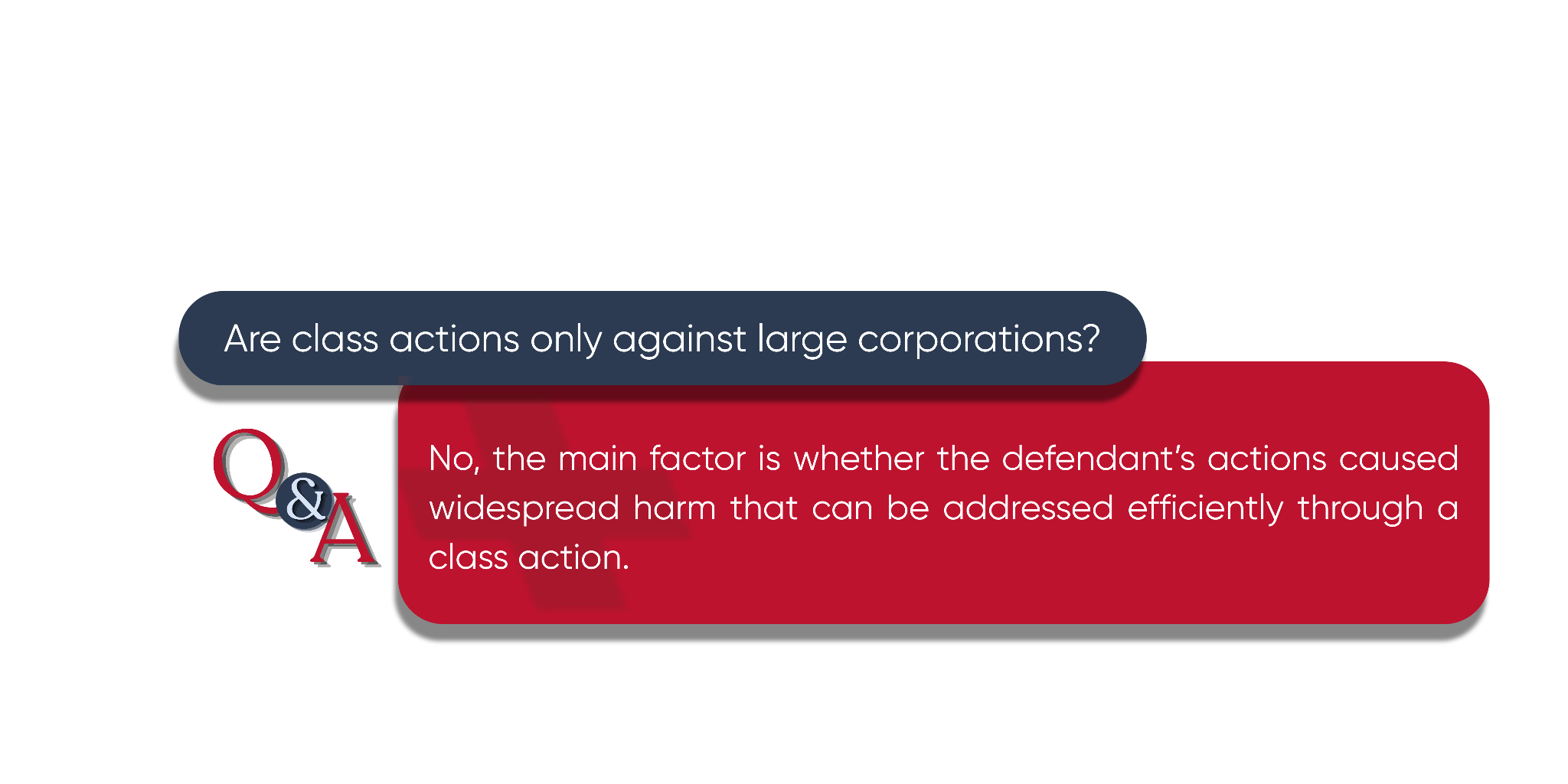
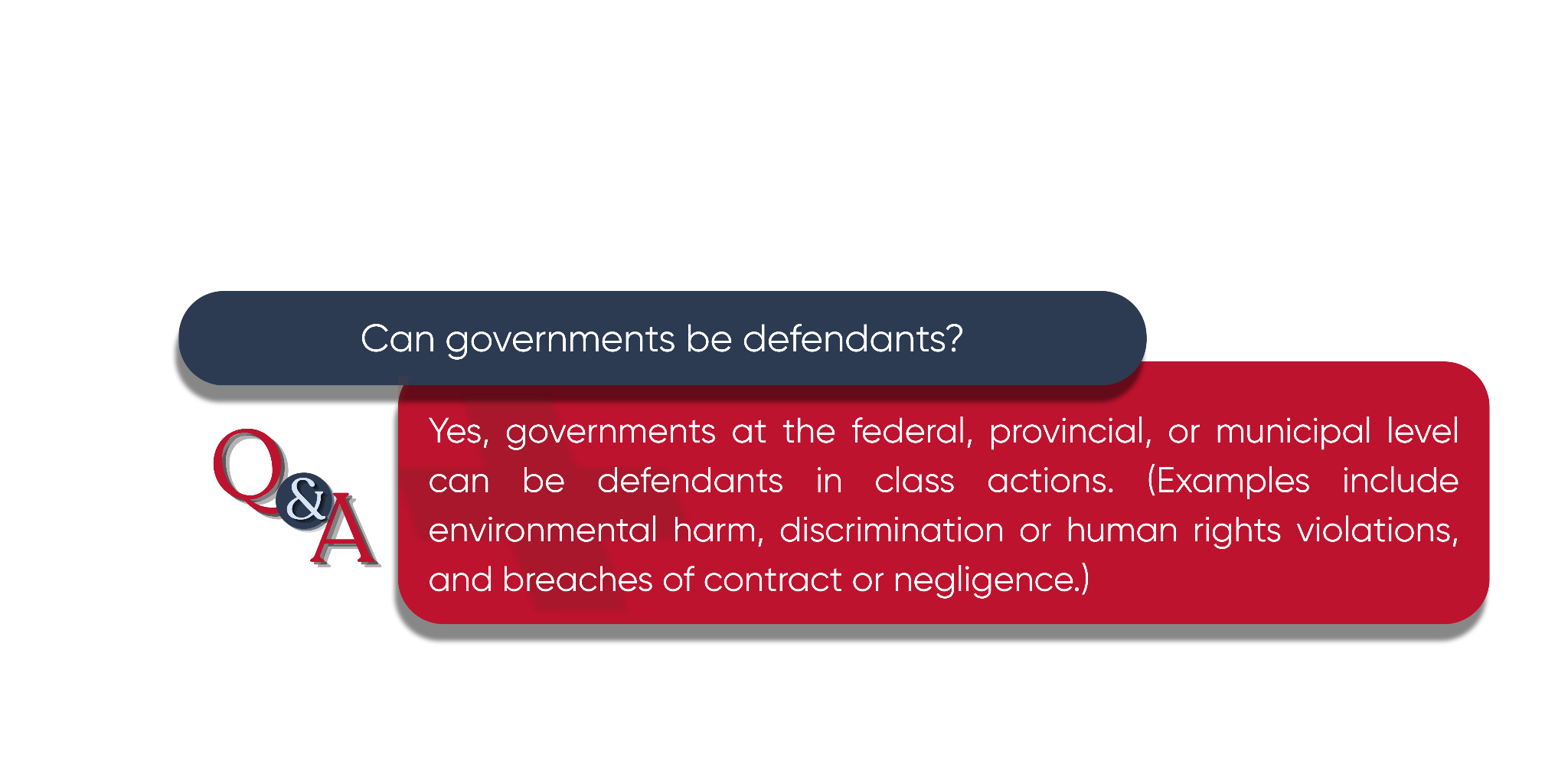
Class actions occur when representatives seek justice in the interest of a group of people who have claims involving common legal or factual issues against the same entity. Usually, these lawsuits are against large corporations or government bodies whose negligence caused a breach in safety, security, or general wellbeing which can be faulted by their product, service, or policy.
Class actions serve as an equalizer between the people affected and the organization that caused wrongdoing, encouraging corporate accountability. In many cases, the plaintiffs would otherwise experience great challenges and financial strain to pursue a lawsuit. This type of lawsuit also can reduce inconsistencies – if 100 people sued the same company individually, it is not guaranteed they would all receive the same court ruling.
Fortunately for Canadians, our country is consistently one of the most active globally in filing class action lawsuits. With growing privacy concerns in advancing technology, Canada has seen a considerable increase in data-related class actions since 2025.
It’s important for Canadians to know there are protections in place when widespread harm occurs. Understanding how class actions work in Canada allows you to make informed decisions and seek the justice you deserve if the need arises. There may even be an active class action you’re not aware of that can help you.
In our guide, we aim to outline the ins and outs of class actions in Canada: from how they come to be, to the legal stages, eligibility, and more.
What Is a Class Action Lawsuit in Canada?
Quick Definitions
- Representative plaintiff: plaintiffs are the people who make a legal complaint and initiate a lawsuit against a defendant. Usually, plaintiffs are one person or organization. In class action cases, one or more people act as representatives on behalf of the larger class of people involved in the lawsuit.
- Class members: the individuals being represented in court, who fall within the class defined by the court. Class members may qualify for compensation if the case succeeds or settles. Those who do not opt out are generally bound by decisions on the shared issues and any court-approved settlement. Most commonly, anyone who meets the class definition is automatically included in a lawsuit unless they choose to opt-out.
- Class counsel: the litigator(s) who represent the plaintiffs of a class action in court. Class counsel handles filing, negotiating and investigating the case. These lawyers work closely with representative plaintiffs to ensure that their legal strategy suits the needs of the class members.
- Defendant(s): the government, corporate body, or individual who is accused of causing mass-harm to the class members, usually determined by identifying a pattern of damages with a common denominator.
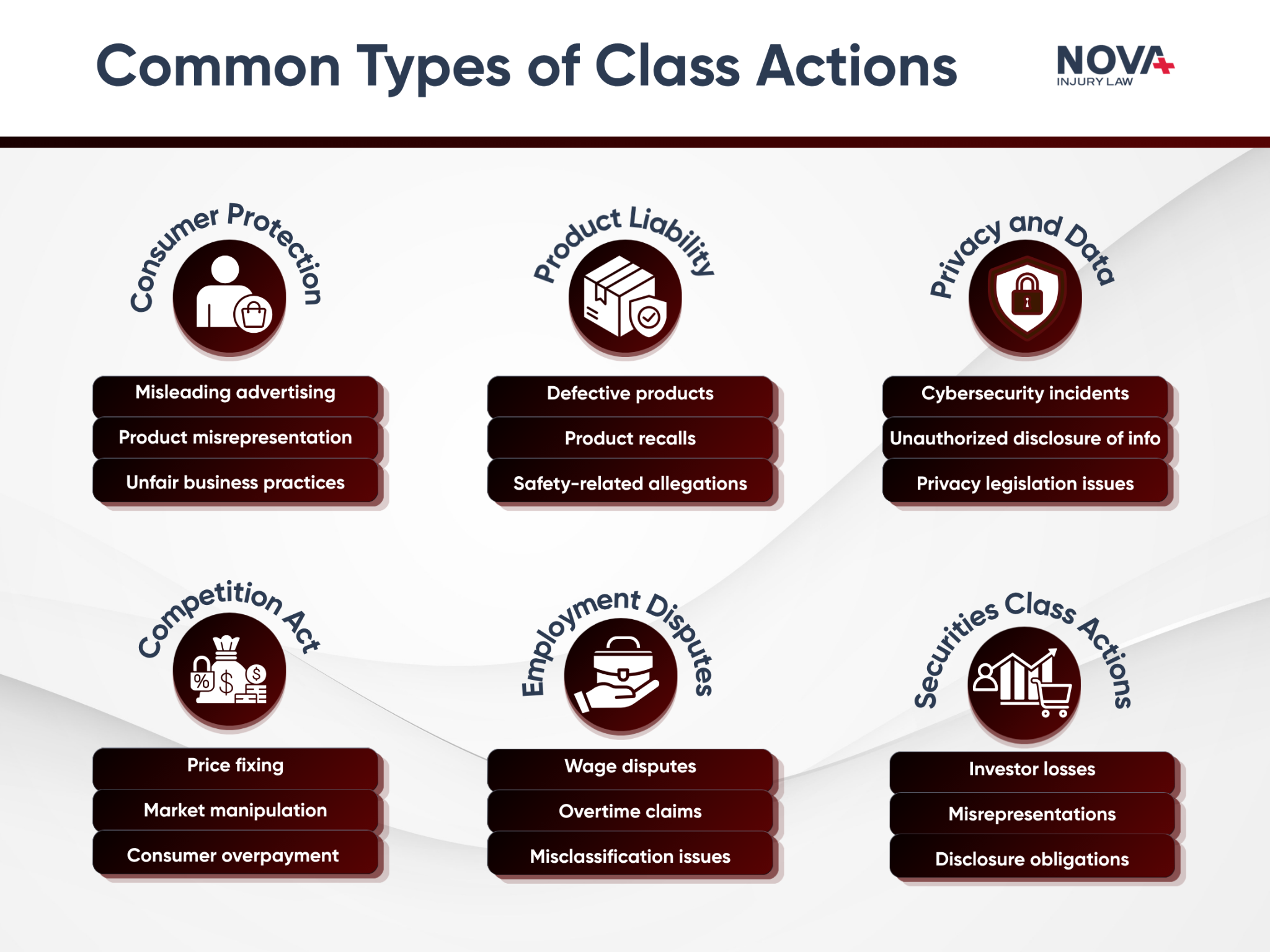
Common Types of Class Actions
The Purpose of Class Actions
Class actions are useful for multiple reasons. On the judicial end, class actions are more convenient than hundreds of small, very similar lawsuits. For class members, this type of lawsuit creates more consistency in outcomes, and usually at a lower cost than an individual suit (especially against a large corporation.) Class actions can also benefit the general public, because defendants have the opportunity to take accountability and modify their actions due to legal recourse. This can look like stricter product regulations, safer data protection, or more transparency to consumers.
How Class Actions Differ From Individual Lawsuits
Class actions and individual lawsuits are both ways to seek justice through the courts, but they operate differently in practice. Understanding these distinctions can help you decide which path may be appropriate for your situation.
- Plaintiffs: this is where the distinction between plaintiffs and representative plaintiffs matters. In an individual lawsuit, a small number of people or organizations bring a claim against a defendant. In a class action, one or more representative plaintiffs file a lawsuit on behalf of the class. Class members do not usually have to actively participate, but are still affected by the outcome.
- Filing: Individual lawsuits can be filed relatively quickly once a claim is prepared. Class actions, however, must go through a certification process in Canada (or authorization in Quebec). The court must determine that the case meets specific criteria, such as common issues among class members, before it can proceed as a class action.
- Payment: In individual cases, legal fees depend on the agreement with the lawyer, including whether the lawyer is paid only if the case succeeds. In class actions, legal fees are often paid out of any settlement or award and must be approved by the court (similar to a contingency plan.) This makes class actions more accessible to individuals who might not otherwise afford legal fees.
- Legal Strategy: Individual lawsuits focus on the specific facts and damages of one person’s case. Class actions require more coordination and dialogue, because the representative plaintiff must factor in the best interest of the entire class before relaying instructions to class counsel. The goal is to put forward the most common and relevant issues shared by class members, rather than focusing on individual differences.
- Approval: Settlements in individual cases generally only require agreement between the parties (plaintiff and defendant.) In class actions, there is an additional step of court approval for settlements. This allows the court to review the proposed settlement before it becomes binding on class members.
How Class Actions Work in Canada
Canada’s Class Action Framework
Class actions in Canada are governed by both provincial and federal legislation.
- Provincial Legislation: Most class actions are brought under provincial laws, such as Ontario’s Class Proceedings Act, or Nova Scotia’s Class Proceedings Act. These acts establish the rules for certification, procedure, and settlement and differ slightly by province.
- Federal Court: The Federal Court of Canada handles class actions in areas where federal legislation gives that court jurisdiction, such as certain claims against the federal government, intellectual property disputes, and claims under the Competition Act. A class action does not belong in Federal Court simply because it involves people in multiple provinces.
Certification and Authorization of Class Actions
Before a class action can proceed, it must be certified by the court (or authorized in Quebec). This stage focuses on whether the case is suitable to move forward as a class action, rather than whether it will ultimately succeed.
In common law provinces, the certification process evaluates if:
- The claims raise common issues.
- A class proceeding is the preferable procedure.
- The representative plaintiff can adequately represent the class.
- The class is clearly defined.
- The pleadings set out a legally recognizable claim.
Quebec follows a similar process, instead called authorization, but does not require proof that a class action is the preferable procedure. This is one important difference between Quebec’s civil law system and the common law framework used in other provinces.
National Class Actions
National class actions involve claimants across multiple jurisdictions (provinces with different legal guidelines). Because class actions work on provincial legislation, courts must take extra considerations when similar lawsuits are filed in different provinces.
Sometimes, courts will coordinate to avoid repetition or inconsistent outcomes. This can look like pausing overlapping cases, combining proceedings, or designating one jurisdiction to take the lead.
Courts and class counsel also coordinate procedural steps such as certification, notice to class members, and settlement approval. This collaborative approach helps ensure fairness and consistency for class members across the country.
Who Can Be Included in a Class Action?
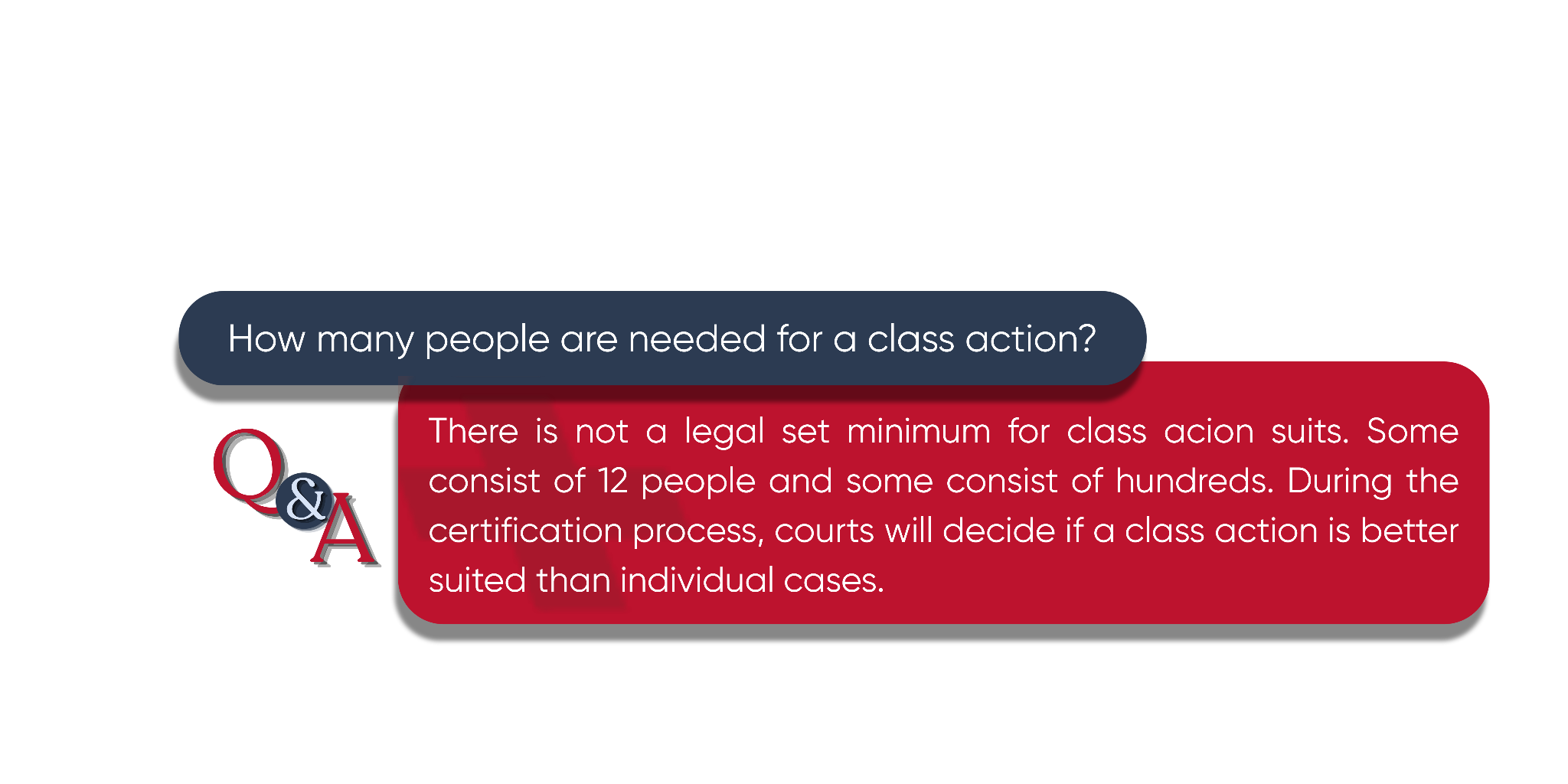
Determining who is included in a class action is a foundational step in the process. Courts must be satisfied that the proposed class is clearly defined, based on objective criteria, and connected by common legal or factual issues.
- Defining the class: The class is determined by outlining the shared issues related to the case. These common issues link all members together and form the foundation of the lawsuit. The definition must clearly identify who is covered. It must be inclusive enough to include all affected individuals, but specific enough to remain manageable.
- Class member criteria: To be included, individuals must meet specific, objective criteria tied to the claim. This often includes factors such as purchasing a product, using a service, or being exposed to a particular risk within a defined time period. The criteria must allow individuals to determine, with reasonable certainty, whether they are part of the class.
- Identifying the class: The class must be clear and easy to identify. This does not mean every member has to be known right away, but the class must be defined clearly enough to determine who qualifies. There is often a practical way to figure out who should be included. For example, records like purchase history, contracts, or customer lists can help identify class members. This makes it easier to notify people about the case and ensure they can take part or receive compensation if the case is successful.
- Inclusion and participation: Once a class action is certified (or authorized in Quebec), it proceeds on behalf of all class members. In common law provinces, individuals are automatically included unless they choose to opt out within a specified timeframe. In Quebec, members are included unless they opt-out themselves.
By clearly defining who is included, the court and legal council can manage the class action to be fair, efficient, and focused on resolving shared issues across the group.
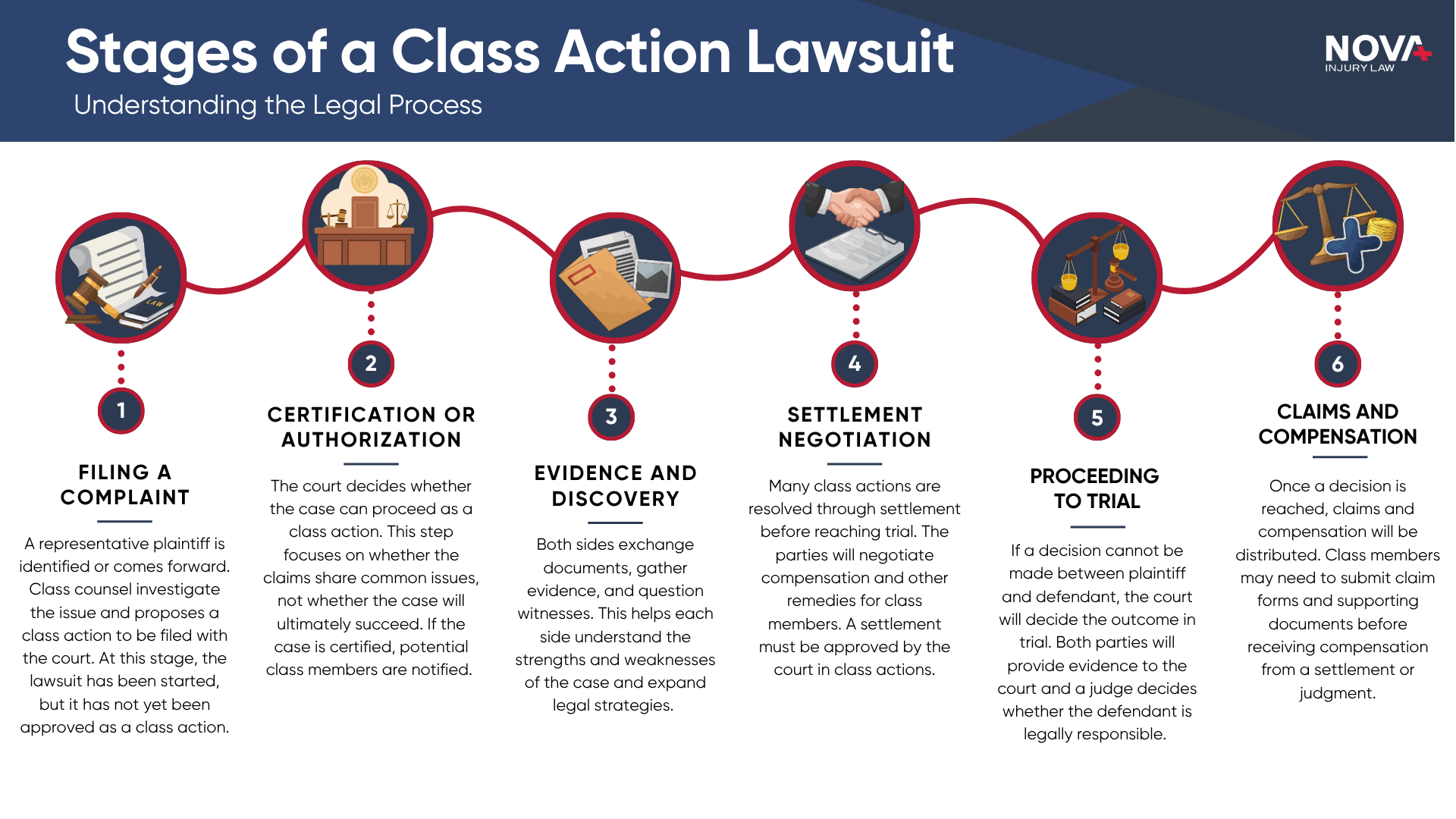
The Stages of a Canadian Class Action Lawsuit
Who Can Start a Class Action Lawsuit?
To file a class action lawsuit, a representative plaintiff must come forth on behalf of the group. The representative plaintiff is not the lawyer or law firm assigned to the case. Class counsel represents the proposed representative plaintiff and works on the case before and after certification.
To be a representative plaintiff, there are specific qualifications required:
- Class Member: the plaintiff normally must be a member of the identifiable class, meaning they meet class member criteria and were affected by the same issue as the rest of the class. However, in Nova Scotia, the court may appoint someone who is not a class member if necessary to avoid substantial injustice to the class.
- Fair Representation: must be able to represent the class fairly and adequately, without a conflicting interest on the shared issues.
- Coordination: must have a workable plan for advancing the case and informing class members about its progress.
- Residency: in provincial class actions, the representative plaintiff often must be a resident of the province the legal proceeding is taking place in. Nova Scotia’s Class Proceedings Act does not require the representative plaintiff to reside in Nova Scotia.
Being a representative plaintiff requires time, diligence, and organization. Although technically any class member can seek appointment, the court will decide if representation is adequate based on this criteria.
How Do Canadians Join a Class Action?
Automatic Inclusion
In most Canadian class actions, individuals do not need to actively sign up to participate. Provinces typically use an opt-out system, meaning anyone who meets the class definition is automatically included in the lawsuit unless they take steps to remove themselves.
- Opting In or Out*: If a person falls within the class member criteria as outlined above, they are generally included once the case is certified without signing up in advance, unless the applicable rules or court order provide otherwise.
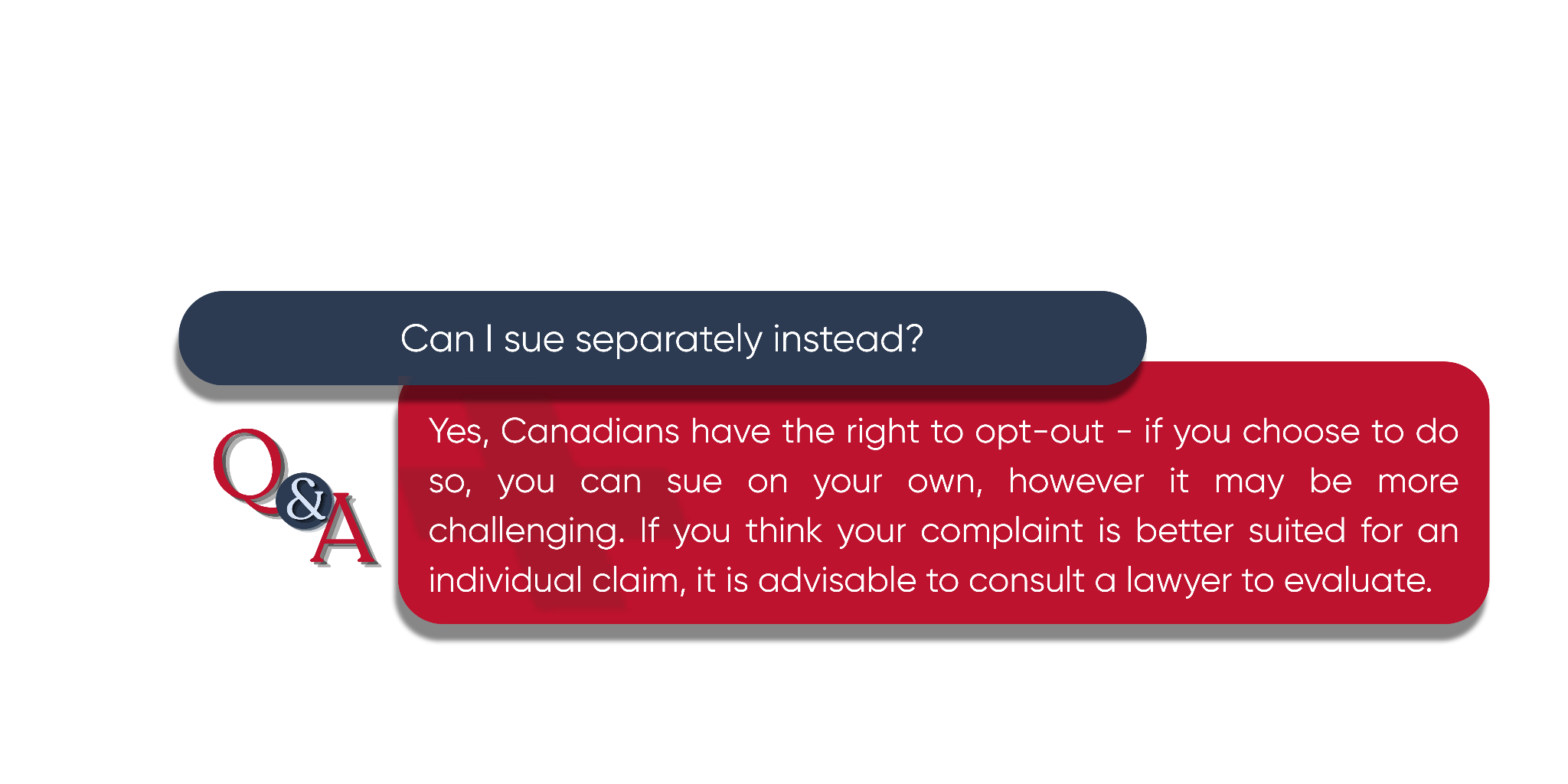
- Choosing to opt out: Class members who opt out will not be bound by the outcome of the case. This means they will not receive compensation from any settlement or judgment, but may be able to pursue their own legal action separately, subject to applicable limitation periods.
In many cases, class members do not need to participate actively in the lawsuit. Their role may involve receiving updates or filing a claim once there is a settlement or judgment. Representatives may ask for evidence, or confirm the goals of the lawsuit, but direct communication with the court is not typical.
*Although the opt-out system is standard across certain provinces, procedural details may vary slightly depending on provincial class proceedings guidelines.
Understanding Class Notices
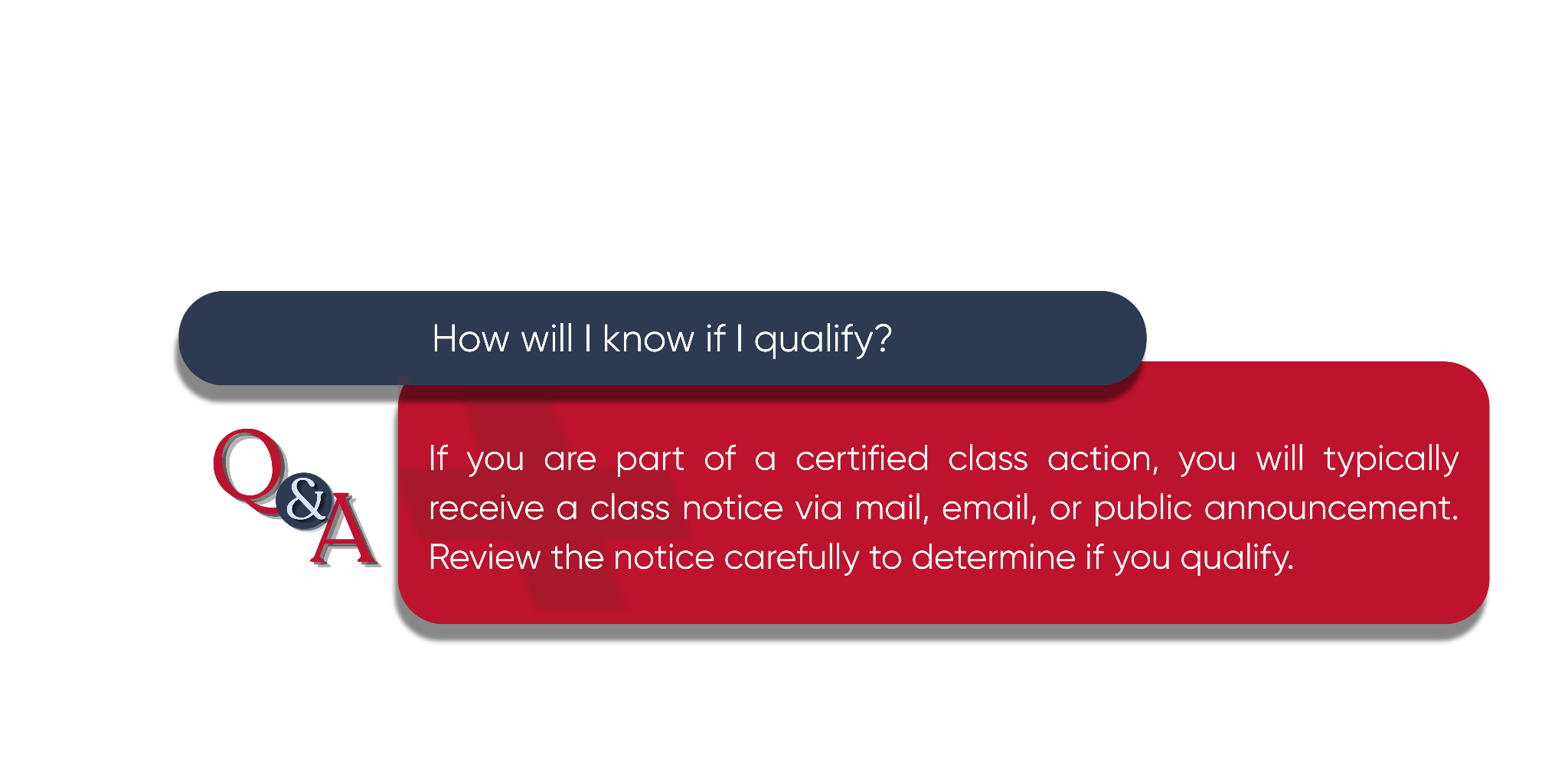
Class members are typically notified of the lawsuit through class notices, which provide essential information about their rights and options. Courts generally decide whether notice is needed and, if so, approve how it is given.
- Purpose of notice: Notices inform class members about the existence of the lawsuit, who is included, what the case is about, and what rights they have.
- Methods of communication: Notices may be published in newspapers, sent via email or mail, or posted on dedicated websites, depending on the circumstances.
- Deadlines: Class notices include critical deadlines, such as the date to opt out or the deadline to file a claim after a settlement.
Notices typically include eligibility criteria, the reason for the claims, the status of the case, and important deadlines. They also explain how to opt out or object to a proposed settlement.
Filing a Claim After Settlement
If a class action is resolved through a settlement, class members may need to submit a claim, depending on the settlement terms.
- Claims Process: After a settlement is approved by the court, someone may be appointed to manage payments to class members. Depending on the settlement, you may need to fill out a claim form to receive compensation. These forms are usually available online or by mail. In some cases, payments are made automatically without requiring a claim form.
- Information Required: The form may ask for details confirming eligibility, such as dates of purchase, account information, or description of losses.
- Supporting Documents: Depending on the case, claimants may need to provide receipts, invoices, bank or credit card statements, or other proof. In some consumer claims, documentation requirements may be flexible to encourage greater class participation.
- Verification: If a claims process is used, submitted claims are reviewed to ensure they meet the criteria set out in the settlement agreement. In some cases, claims may be partially adjusted based on the information given.
- Payment Distribution: Once approved, compensation may be issued through direct deposit, e-transfer, cheque, or digital payment platforms. The amount each class member receives can vary based on factors such as the total number of valid claims and the specifications of the settlement.
- Cy-près Distributions: If funds remain unclaimed or distribution is impractical, Canadian courts may approve cy-près payments, which direct money toward purposes expected to benefit class members. For undistributed court awards in Nova Scotia, other options include using the money for case costs, paying it to the Province, or returning it to the defendant.
When a class action receives a judgment (decided by the court rather than settled), the court determines how damages will be distributed. Depending on the court’s orders or the settlement terms, payments may be automatic or class members may need to submit claims and supporting evidence.
What Compensation Is Available in Canadian Class Actions?
Class members may be eligible for various types of compensation, including:
- Economic Loss: This covers direct financial losses. For example, money you had to spend, wages you lost because you could not work, or a drop in the value of your property.
- Refunds: You may get your money back if you paid for a faulty product, were overcharged, or were treated unfairly by a business.
- Reimbursement: This includes costs you had to pay because of the issue, such as medical bills, repair costs, or travel expenses.
- General damages: This is for harm that is harder to measure in dollars, like pain and suffering, stress, or loss of enjoyment of life.
- Future Losses: In some cases, compensation may include future costs, such as ongoing medical care or lost income.
- Punitive Damages: In rare cases, the court may order extra payment to punish a company for very harmful or reckless behavior and to discourage others from doing the same.
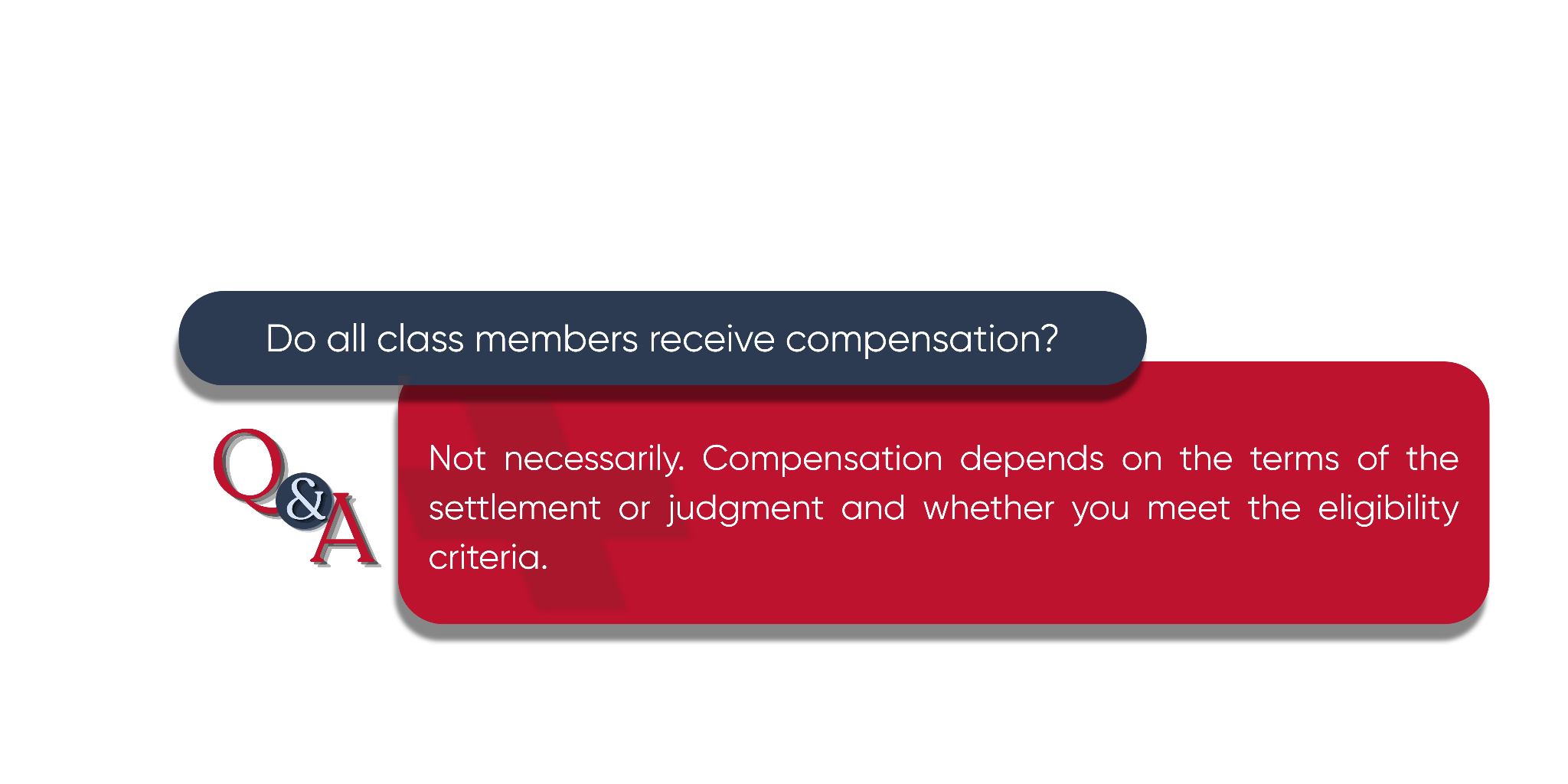
The amount each person receives can vary. It often depends on how many people file claims, how serious the harm was, and the total amount of the settlement or court award.
Non-Monetary Recovery
In addition to financial compensation, class actions can result in non-monetary relief that benefits the class, and by extension future consumers:
- Injunctions: Courts may order the defendant to stop harmful behavior, such as not using false advertising or unsafe business practices.
- Business Changes: Based on injunctions, a company may have to change how it operates to follow the law and treat consumers fairly.
- Compliance: The company may need to put new rules or systems in place to prevent the problem from happening again.
Distribution of Settlement Funds
The way settlement funds are distributed depends on the terms of the settlement and the nature of the harm:
- Equal distributions: Eligible class members may receive the same amount, which is most common when the harm is uniform (e.g., a small refund for each affected individual).
- Claims-based distributions: Compensation is based on individual claims, such as the number of products purchased or the extent of financial loss. This can account for individual differences but requires claimants to provide evidence.
- Direct settlements: In some cases, payments are sent automatically if the defendant has customer records. In others, class members must submit a claim form to receive their part of compensation.
Why Payouts Vary
Not everyone receives the same amount. Payments can differ based on several factors, such as:
- Settlement size and structure: The total amount of money available and how it is divided will affect each person’s share.
- Number of claims: If many people submit claims, the amount per person may be smaller. If fewer people claim, payments may be higher.
- Level of harm: People who were more affected, such as those with higher losses or injuries, may receive more compensation.
- Proof provided: Strong and complete evidence, like receipts or medical records, can lead to higher or more accurate payments.
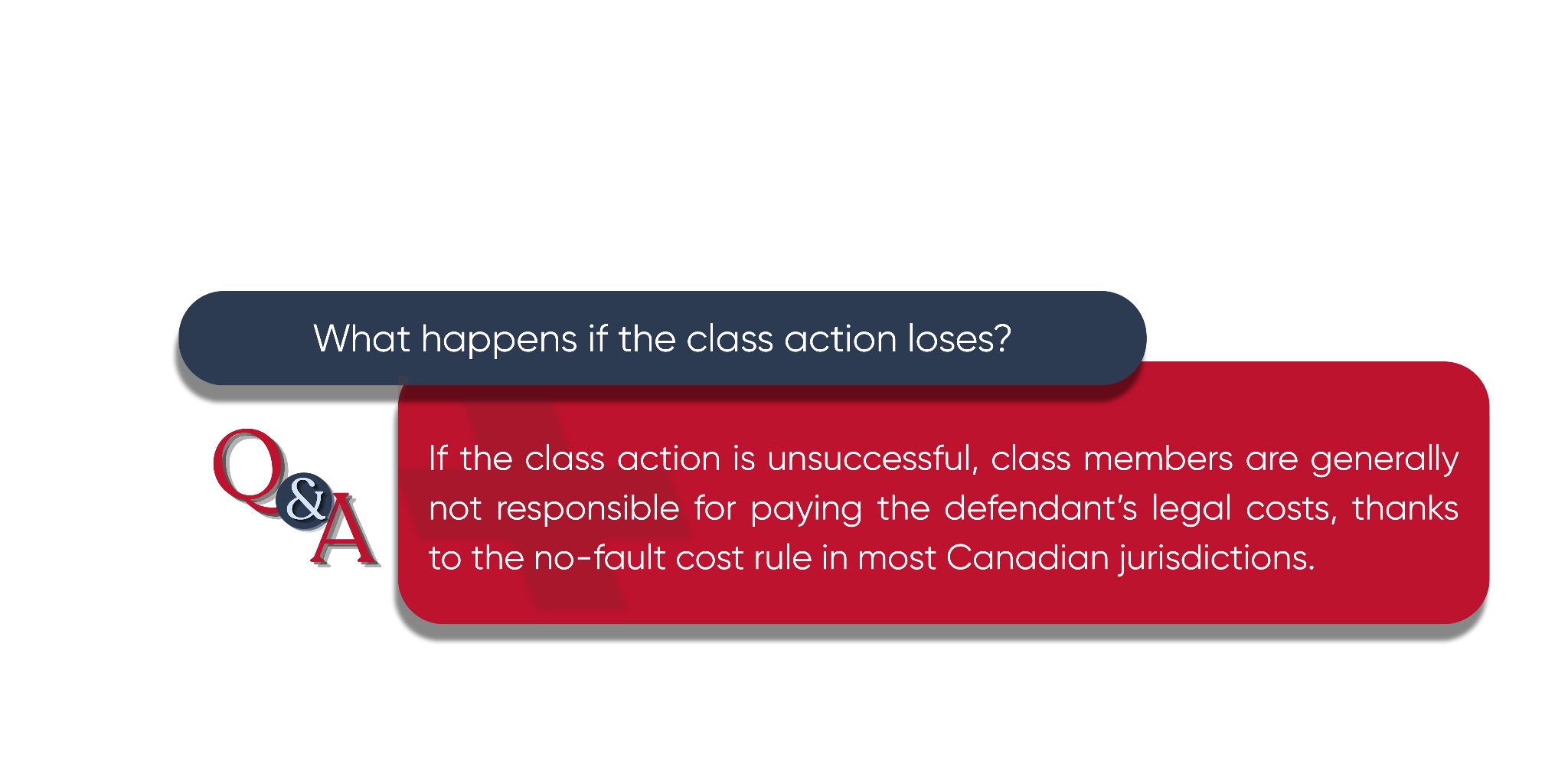
- Legal fees and costs: Lawyer fees and administrative costs are usually paid out of the total settlement, which can affect how much remains for class members.
Current Trends in Canadian Class Actions for 2026
Continued Growth in Privacy Lawsuits
Privacy class actions remain a growing area of concern in Canadian courts. As companies collect more personal information online, issues with data breaches, unauthorized tracking, and misuse of personal information continue to increase.
Many recent class actions involve situations where personal information was exposed, stolen, or used without proper consent. Courts are becoming more willing to certify these claims when large groups of people are affected by the same privacy issue.
Emerging Technology and AI
Artificial intelligence (AI) has made new legal challenges for organizations and consumers. As AI tools become more frequent, class actions may arise from bias or discrimination, misuse of personal data, technological errors, or defective or unsafe AI services.
With new technology comes new challenges for courts. Canada is currently developing new rules for AI-related cases.
Consumer Protection Trends
Consumer protection class actions continue to be common across Canada. These lawsuits often involve allegations that businesses treated customers unfairly or provided misleading information, such as:
- Hidden fees and extra charges
- False or misleading advertising
- Unfair contract terms
- Problems with subscription services
- Online purchasing disputes
As more Canadians shop online and use digital services, consumer-related class actions are expected to remain active.
Competition Law Developments
Competition class actions involve allegations that businesses engaged in unfair market practices. Common examples include:
- Price-fixing agreements
- Cartel activity
- Misleading marketing
- Abuse of market power by large companies
Recent changes to Canada’s Competition Act have increased penalties for certain anti-competitive conduct. As a result, more class actions may be brought forward in this area. Not every type of conduct listed above creates a private right to claim damages under the Competition Act.
Final Thoughts
Class actions are an important part of Canada’s legal system, helping people seek justice when they have been harmed by the same company, organization, or institution. By allowing individuals to pursue claims together, class actions improve access to justice, promote accountability, and create more consistent outcomes.
Understanding how class actions work, from certification and class notices to settlements and claims processes, can help you make informed decisions if you are affected by a widespread issue. While not every proposed class action succeeds, these lawsuits remain a powerful tool for addressing large-scale wrongdoing and encouraging positive change.
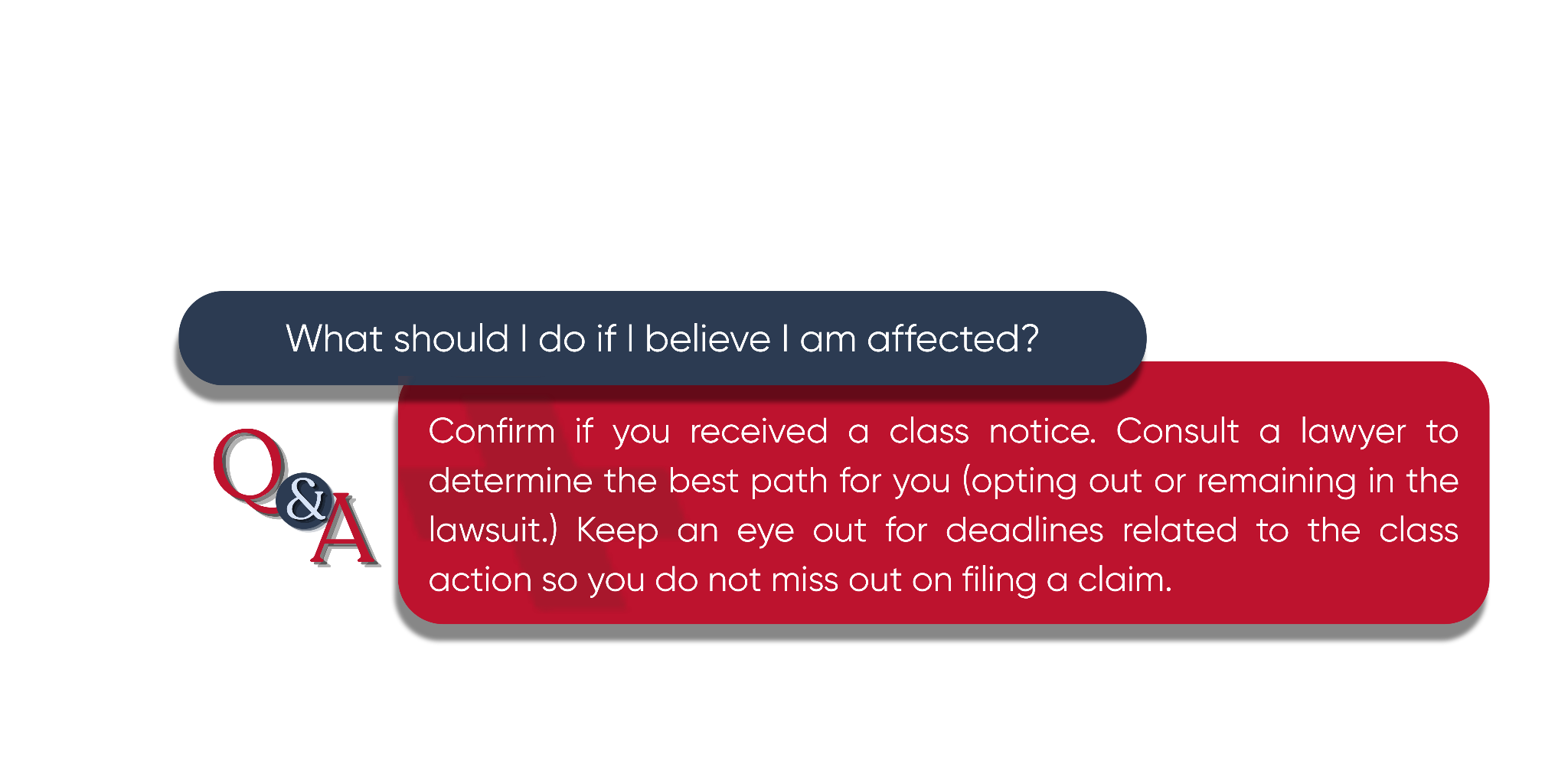
If you believe you may qualify for a class action, it is important to stay informed, review notices carefully, and pay attention to important deadlines. Knowing your rights is the first step toward protecting them.


