



 (902)442-8853
 CALL US
 EMAIL US

If you have been injured in an accident, you may hear the term “general damages.” Many people have never heard the term before starting an injury claim.
Others have heard it but are not sure what it means. Some people assume general damages cover every loss caused by an accident. Others believe they only apply in severe injury cases.
Neither assumption is correct.
General damages are one part of a personal injury claim. They are meant to compensate a person for losses that do not come with a receipt, invoice, or bill.
For example, there is no receipt for chronic pain.
There is no invoice for anxiety.
There is no bill for the loss of a hobby that once brought happiness.
Yet those losses are real. In many cases, they are some of the hardest losses a person experiences after an accident.
A broken bone may heal. Medical treatment may end.
However, the effects of an injury can remain.
A person may no longer enjoy sports.
They may struggle to sleep. They may become anxious while driving. They may feel frustrated because they cannot do the things they once enjoyed.
The law recognizes these losses. That is where general damages come in.
Across Atlantic Canada, including Nova Scotia, New Brunswick, Prince Edward Island, and Newfoundland and Labrador general damages are often one of the largest parts of a personal injury claim.
Whether an injury happens in a car accident or a slip and fall, a motorcycle collision, a boating accident, or another type of incident, general damages may be available.
Many people hear the term but do not understand how it works. Others assume there is a simple formula that determines compensation.
There is not. Every injury is different. Every person is different. The same injury can affect two people in very different ways.
This guide explains what general damages are and how courts assess them, what evidence matters, and what factors may affect the value of a claim.
What Are General Damages?
General damages compensate people for losses that are difficult to measure with exact numbers.
Some losses are easy to calculate. If you spend money on medication, there may be receipts. If you pay for physiotherapy, there may be invoices. If you miss work, employment records may help calculate lost income.
Pain does not work that way.
There is no receipt for chronic headaches.
There is no invoice for emotional suffering.
There is no bill showing the value of losing the ability to enjoy favourite activities.
General damages exist because many of the most serious effects of an injury cannot be measured with simple math.
General damages often include compensation for:
- Physical pain
- Emotional suffering
- Loss of enjoyment of life
- Loss of independence
- Permanent impairment
- Reduced quality of life
Lawyers sometimes call these non-pecuniary damages. Most people simply call them pain and suffering damages.
The purpose is not to place a dollar value on a person. That would be impossible. Instead, the goal is to recognize how an injury has affected that person’s life.
Why Do General Damages Exist?
Many people ask why courts award money for pain and suffering.
It is a fair question. Money cannot undo an injury. Money cannot remove pain. Money cannot restore years that have already passed. Even so, the legal system still needs a way to recognize those losses.
Imagine two people suffer injuries in separate accidents.
Both spend the same amount on treatment.
Both miss the same amount of work.
Both have similar medical expenses.
On paper, their financial losses look identical. However, one person recovers fully within a few months. The other develops chronic pain that lasts for years. The second person has suffered a greater loss. General damages help address that difference.
The law recognizes that injuries affect much more than finances.
They affect daily life, family relationships, hobbies, independence, your emotional well-being, and so many more areas.
General damages are meant to recognize those losses.
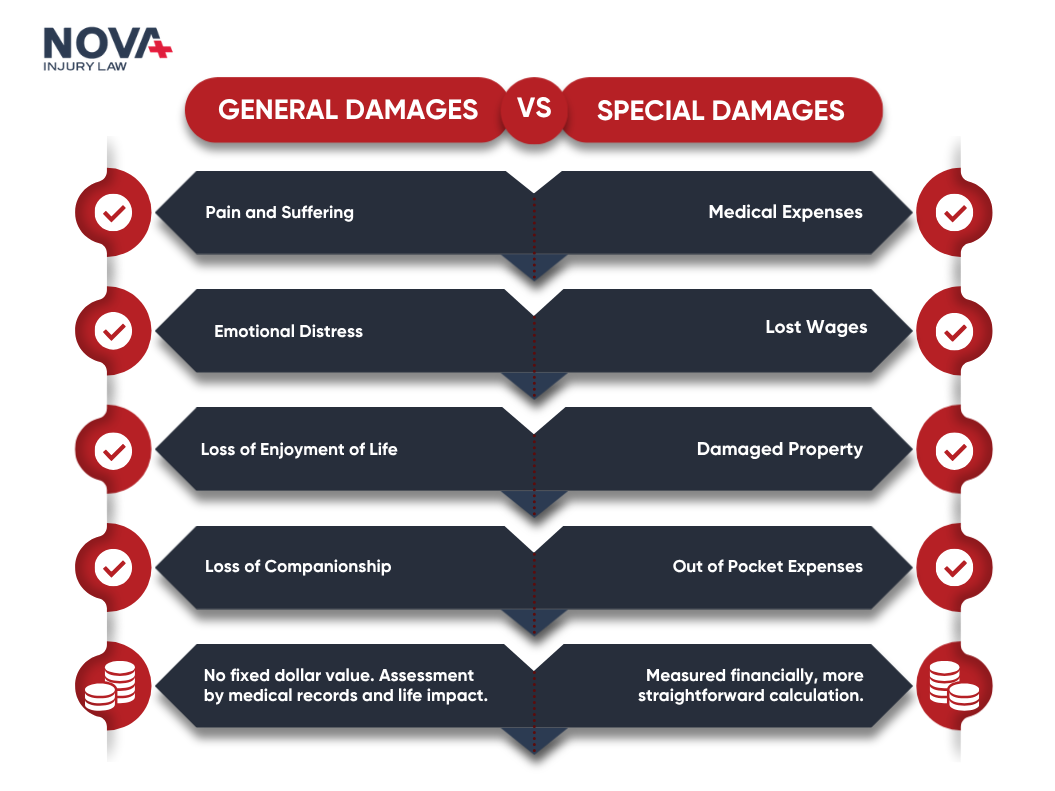
General Damages Versus Special Damages
People often confuse general damages and special damages.
The difference is important. General damages compensate losses that do not have a fixed dollar value. Special damages compensate losses that can often be calculated directly.
For example, if an injured person spends money on medication, receipts may show the cost. If they pay for physiotherapy, invoices may show the exact amount spent. If they travel to medical appointments, records may show transportation expenses. Those losses can often be calculated with reasonable accuracy.
Pain and suffering cannot. A personal injury claim may include several different categories of compensation.
A person may seek compensation for medical expenses, lost income, future care costs, and general damages, among others.
Each category serves a different purpose. Together, they attempt to compensate a person for the full effect of an injury.
The History of General Damages
Courts have recognized pain and suffering for many years. Judges understood long ago that injuries affect more than finances. A person may recover physically but still experience lasting emotional or lifestyle changes.
As personal injury law developed, courts began reviewing earlier cases when assessing compensation. This helped create greater consistency. Judges don’t start from scratch each time. They compare similar injuries and similar outcomes.
That process continues today. Lawyers often review previous court decisions when assessing a claim. Insurance companies do the same. Courts use those decisions as guidance.
However, every case remains unique.
No two people experience an injury in exactly the same way. That is why courts focus on the individual circumstances of each case.
Common Situations Where General Damages May Apply
General damages can arise in many different types of claims. Motor vehicle accidents are among the most common examples.
A person may suffer neck pain after a rear-end collision. They may develop chronic headaches. They may experience a concussion. All of these injuries may affect daily life.
Slip and fall accidents are another common source of claims. A fall on ice can cause fractures. A fall on a wet floor can cause a serious head injury. A fall on unsafe stairs may result in long-term pain and mobility problems.
Medical negligence claims may also involve general damages.
A patient who suffers avoidable harm may experience pain. Also, emotional suffering, or permanent limitations.
General damages may also arise in cases involving:
- Bicycle accidents
- Pedestrian accidents
- Motorcycle accidents
- Dog attacks
- Boating accidents
- Product liability claims
The type of accident may change. The legal principles are often similar. The key question remains the same. How has the injury affected the person’s life?
Pain and Suffering Explained
Pain and suffering is the part of general damages most people recognize. Pain can affect nearly every area of life.
It can affect sleep, work, exercise, family activities, and relationships.
Many injuries heal within weeks or months. Others continue for years. Some people experience pain every day. Others experience pain only during certain activities. Either way, ongoing pain can be exhausting.
Imagine waking up every morning with severe back pain.
Imagine struggling to sit through a family dinner.
Imagine being unable to lift your child because of shoulder pain.
These losses may not create medical bills. However, they can still have a major effect on quality of life. That is why courts take pain seriously.
Pain is not always visible.
A person can appear healthy while struggling every day.
The law recognizes that reality.
Pain Is Not Always Physical
Many injuries create emotional suffering as well.
A serious collision may leave someone afraid to drive. A visible scar may affect confidence. A concussion may cause frustration and anxiety. Chronic pain may contribute to depression.
These emotional effects are common. They are also important. The law recognizes that emotional suffering can affect a person’s life. Just as much as physical pain. Courts often consider these effects when assessing general damages.
Medical records may help show emotional symptoms. Counselling records may help as well. Family members and friends may also provide important evidence.
Loss of Enjoyment of Life
One of the most important parts of a general damages claim is loss of enjoyment of life.
Life is about more than work. Most people spend years building hobbies, interests, and routines that bring them happiness.
An injury can take those things away.
A person who loved hiking may no longer be able to walk long distances.
A recreational hockey player may never return to the ice.
A gardener may no longer be able to spend hours outdoors.
A parent may find it difficult to play with their children.
These losses matter. Courts recognize that the ability to enjoy life is important. When an injury removes or limits those experiences, general damages may help compensate for the loss.
Many people do not realize how much value they place on ordinary activities until an injury takes them away. Before an accident, it may seem normal to go for a walk, play with children, meet friends for dinner, work in the garden, or take part in community events.
After an injury, those same activities may become difficult or impossible. Some people find they have less energy. Others avoid activities because movement causes pain. Over time, these losses can affect happiness, confidence, and overall well-being.
While they may not create a financial loss, they can still have a major effect on daily life. Courts recognize that the ability to enjoy ordinary moments is an important part of quality of life. Courts may consider these losses when assessing general damages.
Loss of Independence
Many people take independence for granted. They do not think about it until it is gone. Simple tasks can become difficult after an injury.
A person may need help with cooking. They may need help with cleaning. They may need help getting dressed.
Some people require transportation because they can no longer drive safely. Others need help caring for children or maintaining their homes.
Even when help is available, the loss of independence can be difficult. People often take pride in caring for themselves. They value their freedom. They value their ability to manage daily life without assistance.
When an injury reduces that independence, the emotional impact can be significant.
Courts often consider these losses when assessing general damages. The loss of independence is not limited to severe injuries. Even moderate injuries can change how a person lives.
Someone who once completed every household task without help may suddenly need assistance. Someone who always drove themselves to work or appointments may need to rely on family members. These changes can be frustrating.
They can also affect confidence and self-esteem. The loss of independence often extends beyond the physical limitations caused by an injury.
It can affect how a person feels about themselves and their role within their family.
Permanent Impairment
Some injuries heal completely. Others do not.
A permanent impairment is an injury or condition that is expected to continue into the future. Symptoms may improve. However, they may never disappear entirely.
Examples include chronic pain, nerve damage, reduced mobility, permanent scarring, ongoing psychological injuries, and lasting brain injury symptoms.
Permanent injuries often affect many parts of life. A person may require treatment for years. They may face restrictions at work. They may struggle with household tasks. They may no longer enjoy hobbies that once played an important role in their life.
The long-term nature of these losses often increases the impact of a claim. Courts usually pay close attention to medical evidence regarding future limitations.
A permanent injury can affect future plans, travel, retirement, family activities, and so much more.
Many people build their lives around routines and interests that they expect to continue for years. A permanent injury can change those expectations. That is one reason permanent impairments often play a major role when damages are assessed.
How Courts Assess General Damages
Many people want to know how courts calculate pain and suffering damages. There is no exact formula. No chart can determine the value of every claim. No online calculator can accurately measure the impact an injury has had on a person’s life.
Instead, courts consider many different factors. The injury itself is important. The duration of symptoms is important. The impact on daily life is important.
Courts often ask questions such as:
- Can the person still work?
- Can they still enjoy hobbies?
- Has family life changed?
- Do they require assistance with daily tasks?
- Will symptoms continue into the future?
Courts also review similar cases. Lawyers often search for earlier decisions involving comparable injuries. These decisions help create consistency. However, every claim remains unique.
The final assessment depends on the specific facts of the case. The goal is not to assign a value to the injury itself. The goal is to understand how the injury has affected the person.
That difference is important. Two people with the same diagnosis may have very different experiences. The court attempts to understand those differences before reaching a decision.
Why Similar Injuries Can Produce Different Results
Many people assume compensation depends only on the diagnosis. That is not always true. Two people can suffer the same injury and receive different awards.
Imagine two people suffer identical shoulder injuries.
One works at a desk. The other works in construction.
The office worker may continue most daily activities with some discomfort. The construction worker may be unable to perform important parts of their job. The same injury creates different consequences.
The same principle applies to hobbies and recreation.
A knee injury may affect a marathon runner differently than someone who rarely exercises.
A shoulder injury may affect a competitive swimmer differently than someone who does not participate in sports.
Courts focus on how the injury affects the specific individual.
The diagnosis matters. The effect often matters even more.
This approach helps create fairer outcomes.
The law recognizes that people do not live identical lives. Their responsibilities, interests, careers, and goals are different. The effect of an injury must be considered in that context.
The Supreme Court of Canada Damages Cap
One of the most important concepts in Canadian personal injury law is the cap on pain and suffering damages in most bodily injury negligence cases. Many people do not know this cap exists.
The cap comes from three Supreme Court of Canada decisions released in 1978. Lawyers often refer to these decisions as the trilogy cases. In those cases, the Court decided there should be a maximum amount available for pain and suffering damages in these types of claims.
The original cap was set at $100,000. Inflation has increased that figure significantly over time. Today, the cap generally extends past $400,000. The exact amount changes as inflation adjustments occur. The cap does not limit compensation for financial losses and does not apply to every kind of lawsuit.
Very few claims reach the cap. The cap is reserved for the most serious injuries.
Examples may include:
- Severe traumatic brain injuries
- Paralysis
- Multiple amputations
- Catastrophic chronic pain conditions
- Other life-changing injuries
Most injury claims fall below the cap. That does not mean the injuries are minor. It simply means the cap is intended for the most severe cases.
For most injured people, the question is not whether they qualify for the cap. The question is where their injury falls within the broader range of compensation available. Understanding the cap can help people develop realistic expectations.
Many injury claims involve serious losses. However, only a small number involve the type of catastrophic injury required to approach the maximum amount.
Minor Injury Rules in Atlantic Canada
In addition to the national damages cap, some Atlantic provinces have special rules that apply to certain motor vehicle injuries. These rules are often called minor injury caps. They limit pain and suffering damages for qualifying injuries, not every type of compensation in a claim.
However, not every Atlantic province approaches injury claims in the same way.
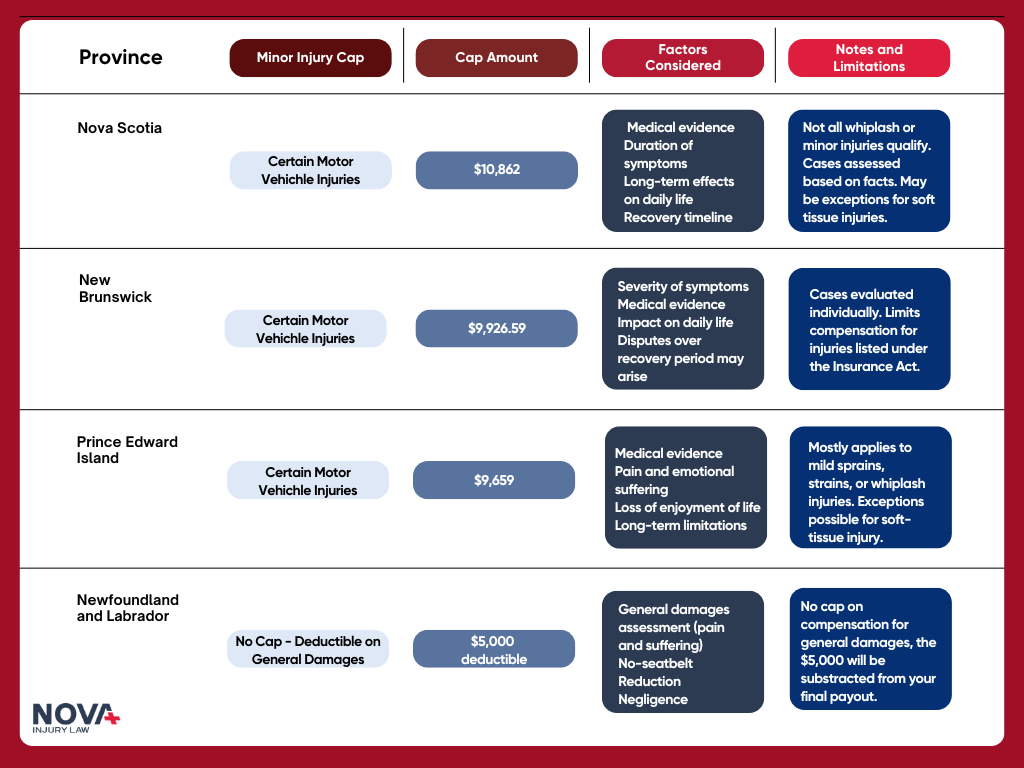
Nova Scotia, New Brunswick, and Prince Edward Island have legislation that may limit compensation for certain minor injuries arising from motor vehicle accidents.
Newfoundland and Labrador uses a different approach and does not have the same type of legislated minor injury cap.
Whether these rules apply depends on the facts of the case. The diagnosis alone may not answer the question. Medical evidence is often important. The duration of symptoms may matter. The effect on daily life may matter.
For that reason, it is important not to assume that a claim automatically falls within a cap. Many people hear the phrase “minor injury” and assume their case is worth very little. That is not always true. The legal definition of a minor injury can be more complex than people expect.
The answer often depends on medical evidence and the long-term effect of the injury. The date of the accident also matters because the rules and dollar limits have changed over time.
The Nova Scotia Minor Injury Cap
Nova Scotia has legislation called the minor injury cap that limits compensation for certain minor injuries arising from motor vehicle accidents.
Not every injury falls within the cap. Not every whiplash injury is considered minor. Many people recover quickly. Others continue to experience symptoms for years. Long-lasting symptoms alone do not automatically remove an injury from the cap.
Medical evidence often plays a major role when determining whether the cap applies. Each case must be assessed on its own facts. The legal test considers whether the injury is a sprain, strain, or certain type of whiplash injury, and whether it causes a serious impairment.
The New Brunswick Minor Injury Cap
New Brunswick also has minor injury cap legislation that applies to certain minor injuries arising from motor vehicle accidents. The goal is similar. The province limits compensation for injuries that meet the legal definition of a minor injury.
However, determining whether an injury qualifies is not always simple.
The law identifies specific types of injuries, and whether they cause a serious impairment or permanent serious disfigurement can affect whether the cap applies.
Medical evidence often plays a major role in these cases. The effect of the injury on daily life may also be important.
As with Nova Scotia claims, every case must be evaluated individually.
Prince Edward Island Injury Claims
Prince Edward Island also has minor injury rules that apply to certain motor vehicle injury claims. For accidents on or after October 1, 2014, these rules focus on sprains, strains, and certain whiplash injuries that do not cause a serious impairment.
As with other provinces, the specific facts matter. Medical evidence is important. The effect on daily life is important.
Pain, emotional suffering, loss of enjoyment of life, and long-term limitations may all play a role when compensation is assessed.
The focus remains on understanding how the injury has affected the person. That principle is consistent across many personal injury claims.
Whether a person lives in Charlottetown or another part of PEI, the impact of the injury often remains the most important issue.
Newfoundland and Labrador Injury Claims
Newfoundland and Labrador handles motor vehicle injury claims differently than some other Atlantic provinces.
Nova Scotia, New Brunswick, and Prince Edward Island have minor injury caps that may limit compensation in certain cases.
Newfoundland and Labrador does not have the same type of minor injury cap. However, other rules may affect the amount a person receives after an accident.
For example, in claims arising from the use or operation of an automobile, a $5,000 deductible generally applies to pain and suffering damages for injuries sustained on or after January 1, 2020. A different amount applies to certain earlier accidents. As with any injury claim, courts look at how the injury has affected the person’s life.
They may consider pain, emotional suffering, loss of enjoyment of life, and ongoing symptoms. Medical records, treatment records, and witness evidence can all help show the impact of the injury.
Chronic Pain Claims
Chronic pain is one of the most common issues in personal injury litigation. It is also one of the most misunderstood.
Many people believe pain must appear on an X-ray or MRI. That is not always true. A person may experience severe and ongoing pain even when imaging studies show little or no objective damage.
Canadian courts have recognized this reality for many years. The focus is often not on what appears on a scan. The focus is on how the symptoms affect the person’s life.
A person living with chronic pain may struggle with everyday activities.
They may have trouble sleeping.
They may avoid social events.
They may stop participating in hobbies they once enjoyed.
Many people become frustrated because they feel their condition is misunderstood. Others develop anxiety or depression because the pain never fully goes away. Chronic pain can affect nearly every part of life.
For that reason, it often plays a major role in general damages claims.
A Chronic Pain Example
Imagine a person who slips on ice outside a business. At first, the injury seems minor. They expect to recover within a few weeks.
Months pass.
The pain remains.
The person struggles to sit for long periods.
Driving becomes uncomfortable.
Household chores take much longer than before.
Exercise becomes difficult.
Friends notice they attend fewer social events.
Family members notice changes in mood and energy.
The injury affects much more than the person’s back. It affects their entire lifestyle. This is why courts often focus on how an injury affects daily life rather than relying only on medical imaging.
Concussions and Brain Injuries
Brain injuries can create some of the most serious effects after an accident. Not all symptoms are visible. That is one reason these cases can be challenging. A person may look healthy while struggling every day.
Concussion symptoms can include:
- headaches
- memory problems
- fatigue
- difficulty concentrating
- sensitivity to light
- mood changes
Some people recover quickly. Others continue to experience symptoms for years.
A brain injury may affect work performance, education outcomes, relationships, and emotional regulation. Some people become frustrated because they cannot perform tasks that once felt easy. Others become overwhelmed by noise, stress, or busy environments.
Courts generally recognize that brain injuries can have a major effect on quality of life. Because many symptoms are not visible, detailed medical evidence is often important.
A Concussion Example
Imagine a university student who suffers a concussion in a motor vehicle accident.
Before the collision, they excelled in school. They balanced classes, work, and social activities.
After the accident, concentration becomes difficult. Reading takes longer. Memory problems appear. Fatigue becomes a daily challenge.
The student remains enrolled.
From the outside, everything may appear normal. In reality, every task requires more effort. Grades decline. Stress increases. Confidence suffers.
This type of loss may not appear on a medical bill. However, it can still have a major effect on a person’s life.
Scarring and Disfigurement
Scars can affect much more than appearance. A visible scar can become a daily reminder of an accident.
Some scars fade over time. Others remain visible for life.
The emotional impact can be significant.
A person may become self-conscious. They may avoid photographs or feel uncomfortable in social settings.
Especially depending on the location of the scar. A facial scar may affect a person differently than a scar that is rarely visible. Courts often consider both the physical and emotional effects of scarring when assessing general damages.
The Impact on Family Relationships
Serious injuries rarely affect only one person. Family members often feel the effects too.
A spouse may take on more household responsibilities. Children may notice changes in a parent’s energy or mood. Family routines may change. Activities that once brought people together may no longer be possible.
An injured person may feel guilty because they cannot contribute in the same way they once did.
The law recognizes that family relationships are an important part of life. When an injury affects those relationships, courts may consider that impact.
Evidence Matters
Evidence is one of the most important parts of any injury claim. The court needs reliable information about how an injury has affected a person’s life. Medical records often provide the foundation.
Doctors may document symptoms, diagnoses, treatment plans, and recovery progress.
Specialists may provide additional opinions.
Treatment records can help show how symptoms developed over time.
However, medical records are only one part of the story. The strongest claims often include evidence from several sources.
The injured person’s own evidence is very important as well. They can explain how life changed after the accident; describe the activities they can no longer enjoy; and discuss how symptoms affect their daily routines.
Witness Evidence
Family members often provide valuable evidence. They may notice changes that others do not see.
A spouse may observe sleep problems. Children may notice changes in activity levels. Friends may see that someone who was once active now spends more time at home. Co-workers may observe changes in physical ability or concentration.
These observations can help explain the real-world effects of an injury. Courts often find this evidence helpful because it shows how the injury affects everyday life.
The Role of Medical Experts
Medical experts play an important role in many injury claims. Their job is to provide opinions about medical issues.
An expert may discuss diagnosis, treatment options, future limitations, and provide opinions about whether symptoms are likely to continue.
In more serious claims, expert evidence can be very important.
A neurologist may explain the long-term effects of a brain injury.
A psychiatrist may discuss emotional injuries.
A chronic pain specialist may explain ongoing pain symptoms.
These opinions often help courts understand complex medical issues.
Recovery and Mitigation
Injured people are generally expected to take reasonable steps toward recovery. This legal principle is known as mitigation.
Mitigation does not require perfection. However, courts may expect a person to follow reasonable medical advice. A decision not to follow a particular treatment recommendation does not automatically reduce compensation; the circumstances and whether the decision was reasonable matter.
Reasonable medical advice may include attending appointments, participating in physiotherapy, and following rehabilitation plans.
The key question is usually whether the person acted reasonably. In certain Nova Scotia and PEI motor vehicle cases, not following applicable treatment recommendations without a reasonable excuse can also affect whether an injury is treated as minor under the legislation. Each case is different. Courts examine the specific facts before reaching a conclusion.
Settlement Negotiations and General Damages
Most personal injury claims settle before trial. Settlement negotiations often focus heavily on general damages.
Lawyers and insurance companies review medical records, treatment history, expert reports, previous court decisions involving similar injuries, and much more.
The goal is to estimate a fair range for compensation. Settlement discussions often involve disagreement.
One side may believe the injury has had a major effect on the person’s life. The other side may argue the impact is less severe.
Many settlements represent a compromise between those positions.
How Insurance Companies Evaluate General Damages
Many people assume an insurance company simply looks at an injury and assigns a number. The process is usually more detailed than that.
Insurance companies often review medical records and treatment notes as well as expert reports, employment records, and witness statements. They also review previous court decisions involving similar injuries.
The insurer will usually look at how long symptoms lasted. They may examine whether the injured person required ongoing treatment. They may review whether the injury affected work, recreation, family life, or daily activities.
For example, two people may suffer similar neck injuries.
One person recovers within a few months.
The other continues to experience symptoms for several years.
The insurer may view those claims very differently. Insurance companies also look at consistency.
If medical records, treatment records, and witness evidence all support the same story, the claim may be viewed as stronger.
This does not mean the insurer will agree with every aspect of the claim.
However, consistent evidence often makes it easier to understand how the injury has affected the person’s life.
What Evidence Can Strengthen a General Damages Claim?
Strong evidence often helps courts, lawyers, and insurance companies understand the full effect of an injury.
Medical records are usually one of the most important forms of evidence. They help show when symptoms began, what treatment was recommended, and whether recovery has occurred.
Treatment records can also be helpful.
Photographs may document visible injuries or scarring.
Witness evidence can help explain how the injury affected daily life.
The injured person’s own evidence is often equally important.
Keeping a journal can help track symptoms over time.
It can also record missed activities, emotional struggles, and day-to-day limitations.
The goal of evidence is not simply to prove an injury occurred. The goal is to show how the injury has affected the person’s life.
Common Mistakes That Can Hurt a Claim
Many people unintentionally make mistakes after an accident. These mistakes can make it harder to prove the full impact of an injury.
Some common examples include:
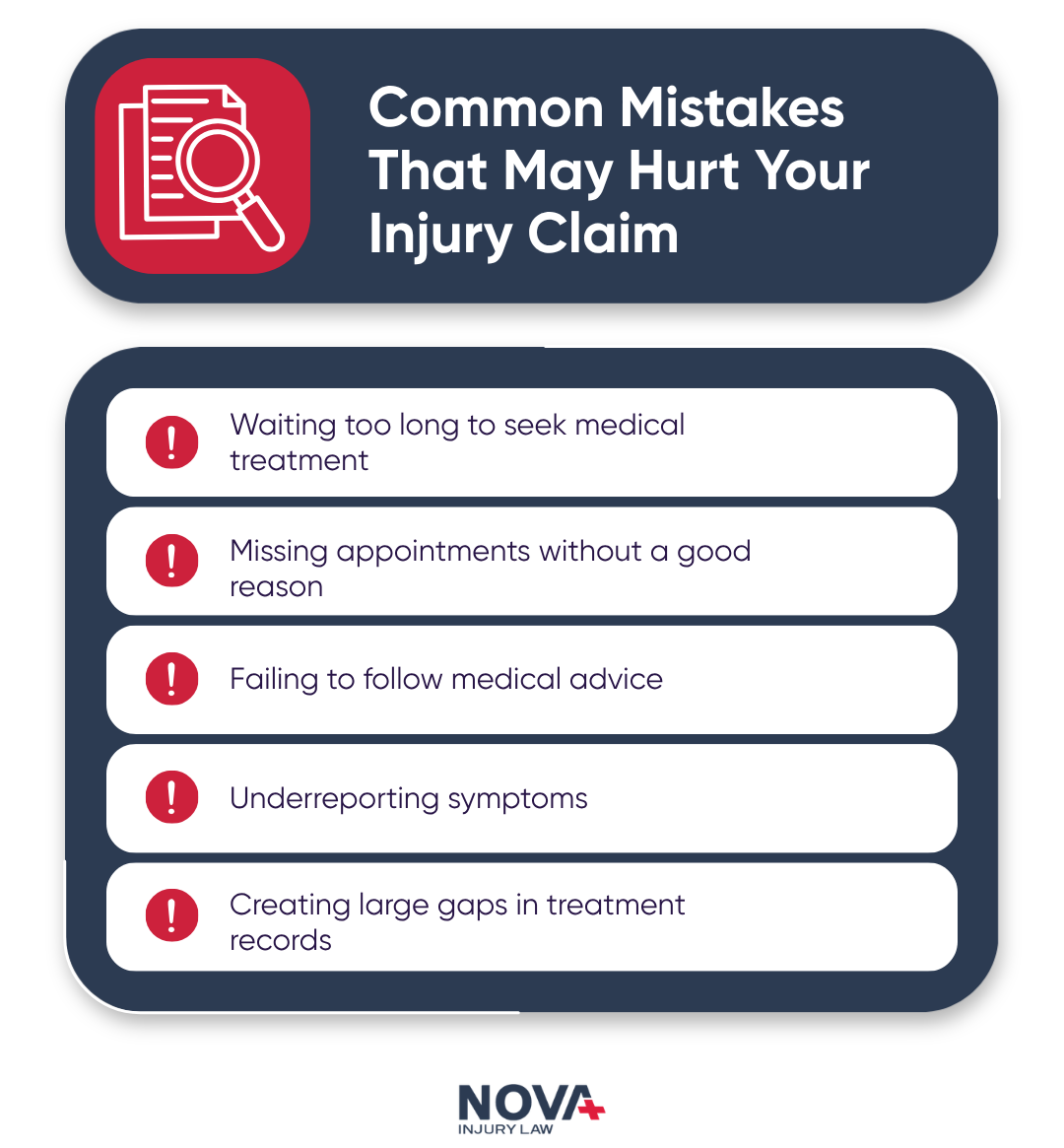
These issues do not automatically destroy a claim. However, they can create questions about the severity of an injury. Consistent treatment and accurate reporting often help strengthen a claim.
Why Documentation Is Important
Good records can make a major difference in an injury claim.
Many people assume they will remember everything. Months or years later, important details can be forgotten. Keeping records can help preserve valuable information.
Many injured people keep a journal.
A journal can record pain levels.
It can track sleep problems.
It can document missed activities.
It can describe emotional struggles.
It can record treatment appointments and recovery progress.
These records may help explain how symptoms changed over time.
Every Injury Claim Is Unique
People often search for average settlement amounts and average pain and suffering awards. While those numbers can provide general information, they do not determine the value of a specific claim.
Every injury affects people differently. Some individuals recover quickly. Others continue to experience symptoms for years.
The same diagnosis can lead to very different outcomes. That is why courts focus on the individual person rather than relying only on medical labels.
The person’s age, lifestyle, and work demands. Along with hobbies, family responsibilities, and future plans may all be relevant.
A fair assessment requires a full understanding of how the injury has affected that person’s life.
Frequently Asked Questions About General Damages
Are general damages available in every injury claim?
Not always. Every claim is different.
The availability of compensation depends on the facts, the evidence, and the law that applies.
Is there a formula used to calculate pain and suffering?
No. Courts consider many factors.
They also review previous cases involving similar injuries.
Can two people with the same injury receive different amounts?
Yes. The effect of the injury often matters as much as the diagnosis.
Do I need medical evidence?
In most cases, medical evidence is very important. Medical records help explain the injury and its effect on daily life.
Does every case go to trial?
No. Most personal injury claims settle before trial.
Can emotional injuries be included?
Yes. Courts often consider emotional and psychological effects when assessing general damages.
General Damages Across Atlantic Canada
The rules governing injury claims can vary between provinces. The basic principles behind general damages are similar across Atlantic Canada.
Courts in Nova Scotia, New Brunswick, Prince Edward Island, and Newfoundland and Labrador recognize that injuries can affect more than a person’s finances.
Pain, loss of enjoyment of life, emotional suffering, and reduced independence can all have a lasting effect on quality of life.
Although the laws and insurance systems may differ from province to province, the goal remains the same.
The legal system attempts to provide fair compensation for the impact an injury has had on the injured person’s life.
Conclusion
General damages are one of the most important parts of personal injury law. They recognize losses that do not appear on a receipt or invoice.
Pain. Suffering. Loss of enjoyment of life. Reduced independence. Emotional distress.
These losses are real. They can affect every part of a person’s life.
Money cannot undo an injury. It cannot erase pain. It cannot restore lost experiences. However, the legal system attempts to provide fair compensation for the harm that has been done.
Courts assess general damages by examining the facts of each case. They consider the injury and symptoms, as well as the effect on work, family life, hobbies, recreation, and daily activities. They also consider whether the effects are likely to continue into the future.
No two claims are exactly alike. The same injury can affect different people in different ways. That is why courts focus on the individual rather than relying only on a diagnosis.
Whether a claim involves chronic pain or a brain injury. Emotional trauma, permanent scarring, or loss of independence. The central question remains the same: How has the injury changed the person’s life?
The answer to that question often plays a major role in determining general damages. By recognizing these losses, personal injury law acknowledges the human impact of injury and attempts to provide fair compensation for those affected by the negligence of others.
This article is for informational purposes only and does not constitute legal advice.